Pygmy Goat Size: How Big Do Pygmy Goats Get? Full Grown Guide
Learn how big Pygmy goats get when full grown including height, weight, and size comparisons. Complete guide to Pygmy goat size from birth to adulthood with growth charts.

Elma K. Johnson
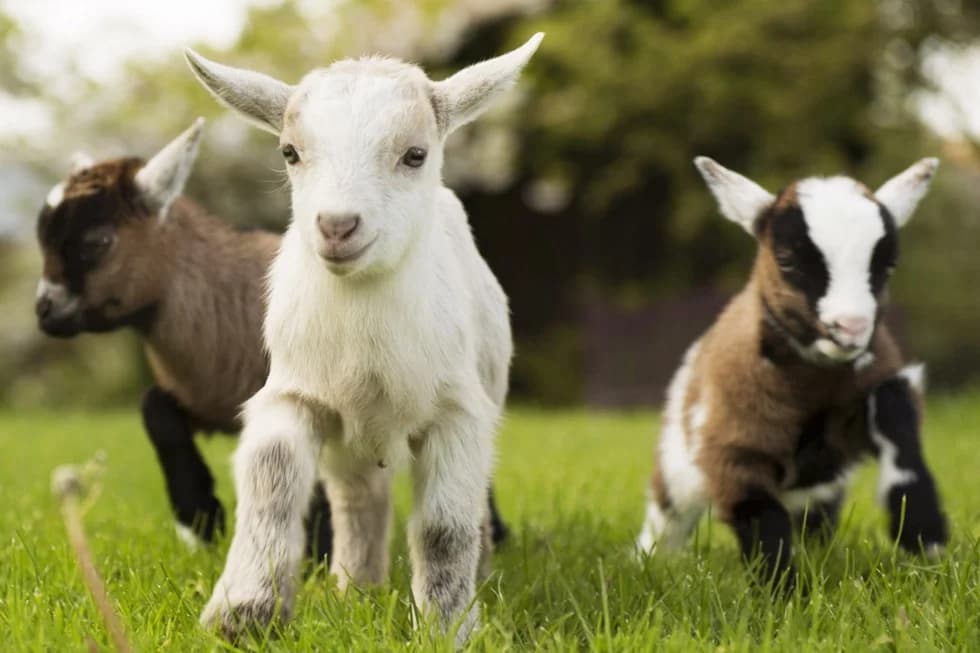
If you're considering bringing home a Pygmy goat, one of the first questions you probably have is: how big will it actually get? It's an important question, because the answer affects everything from how much space you need to what kind of fencing will keep them contained.
Adult Pygmy goats stand 16-23 inches tall at the shoulder and weigh between 60-85 pounds. That puts them roughly at the size of a medium-to-large dog like a Labrador Retriever, though Pygmies have a stockier, more barrel-shaped build that makes them look quite different from any dog.
What makes Pygmy goats distinctive isn't just their small size—it's their proportions. Unlike Nigerian Dwarf goats, which look like proportionally miniaturized versions of standard dairy goats, Pygmies have their own unique body type. They're compact and cobby, with short legs relative to their body length, wide chests, and rounded bellies that give them an almost cartoonish appearance that many people find irresistible.
How Big Pygmy Goats Get: Males vs Females
Like most goat breeds, male and female Pygmy goats differ somewhat in size, though the difference is less dramatic than in larger breeds.
Female Pygmy goats, called does, typically stand 16-22 inches at the shoulder and weigh 55-75 pounds when fully grown. They have a slightly more refined build than males, though "refined" is relative—even female Pygmies maintain that characteristic stocky appearance. A doe's weight can fluctuate somewhat with pregnancy and lactation, so don't be alarmed if your breeding doe gains weight during pregnancy and then slims down again.
Male Pygmy goats (bucks) are generally the largest, standing 16-23 inches tall and weighing 60-85 pounds. Beyond the basic size difference, bucks develop secondary sexual characteristics that make them appear even larger—thicker necks, broader heads, and more muscular shoulders. Intact bucks also develop a distinctive odor during breeding season, which is one reason many people who want Pygmies as pets opt for wethers instead.
Wethers—neutered males—are an interesting case. Because neutering delays the closure of growth plates in the bones, wethers often grow slightly taller than intact bucks from the same genetic lines. They typically reach 16-22 inches in height and 60-80 pounds. Many experienced Pygmy owners consider wethers the ideal pets: they have the friendly, docile temperament of males without the odor and behavioral issues that come with intact bucks, plus they often live the longest of any category due to lack of breeding stress.
From Birth to Full Grown: How Pygmy Goats Develop
Understanding the growth timeline helps you know what to expect and when to be concerned if something seems off.
Pygmy goat kids are remarkably tiny at birth—typically just 6-8 inches tall and weighing 2-5 pounds. Despite their small size, they're usually up and nursing within minutes of being born. These first few months represent the most rapid growth period of a Pygmy's life.
By one month old, that tiny newborn has typically grown to 10-12 inches tall and 8-12 pounds—essentially doubling or tripling its birth weight in just four weeks. This explosive early growth continues through the first six months, by which point most Pygmy kids have reached about 75% of their adult height, standing 15-18 inches and weighing 35-50 pounds.
The rate of growth slows considerably after six months, but continues steadily. By their first birthday, most Pygmies are within a few inches of their adult height, standing 16-20 inches and weighing 50-70 pounds. They look like small adults at this point, though experienced eyes can often tell they're not quite mature.
Pygmy goats typically reach their full adult height somewhere between 2-3 years old. However—and this is important for prospective owners to understand—they continue filling out and developing muscle mass until about age 4. A two-year-old Pygmy might be as tall as it's going to get, but it will likely look noticeably more substantial at four than it did at two. Males especially continue developing their characteristic thick necks and broad shoulders into their third and fourth years.
Comparing Pygmy Goats to Other Animals
If you've never seen a Pygmy goat in person, it can be hard to visualize how big they actually are. Here's how they compare to animals you probably know well.
A full-grown Pygmy goat is roughly similar in size to a Labrador Retriever, though the body shapes are obviously quite different. Labs stand about 22-24 inches at the shoulder and weigh 55-80 pounds—almost exactly the same as a Pygmy, though distributed very differently. The goat's weight is concentrated more in its barrel-shaped body, while the dog's longer legs and narrower frame distribute weight differently.
Compared to a medium-sized dog like a Beagle (13-15 inches, 20-30 pounds), Pygmy goats are considerably larger. And compared to the average house cat (9-10 inches, 8-11 pounds), Pygmies are positively massive.
For people familiar with pot-bellied pigs, Pygmies occupy similar territory in terms of height (14-20 inches for pigs versus 16-23 inches for Pygmies), but adult pot-bellied pigs often become significantly heavier—100-200 pounds is common, which is why they often outgrow their welcome in homes that expected them to stay small.
Pygmy vs Nigerian Dwarf: Understanding the Size Difference
People frequently confuse Pygmy goats and Nigerian Dwarf goats, and it's easy to understand why—they're both small goats that make excellent pets. But once you know what to look for, the difference is obvious.
Nigerian Dwarf goats stand 17-21 inches tall—roughly similar to Pygmies. The weight range is also comparable at 60-80 pounds. So why do Pygmies often look larger and more substantial?
The answer is body type. Nigerian Dwarfs are dairy goats in miniature. They have the same lean, angular build as full-sized dairy breeds like Alpines or Saanens, just scaled down. Their legs are proportionally longer, their bodies narrower, and their overall appearance more refined.
Pygmies, by contrast, were originally bred for meat production in West Africa before becoming popular as pets. They have a distinctly "cobby" build—short legs, wide chests, rounded barrels, and thick, muscular bodies. A Pygmy standing next to a Nigerian Dwarf of the same height will almost always look stockier and heavier.
This matters for prospective owners because Pygmies tend to be more prone to obesity than Nigerian Dwarfs. Their efficient metabolism and stocky build mean they gain weight easily on the same diet that keeps a Nigerian Dwarf lean. More on that below.
For a complete comparison of small goat breeds, see our smallest goat breeds guide.
What Affects How Big a Pygmy Goat Gets
While Pygmy goats fall within a fairly consistent size range as a breed, individual goats can end up at different points within that range based on several factors.
Genetics is the biggest determinant of size. If you're buying from a breeder and size matters to you—whether you want smaller goats for limited space or larger ones for showing—ask to see the parents. Offspring from larger parents tend to be larger, and vice versa. Quality breeding programs produce goats that are consistent in size and type generation after generation.
Nutrition plays a crucial role in whether a goat reaches its genetic potential. Underfed kids can experience permanently stunted growth, especially if malnutrition occurs during the critical first six months of rapid development. This doesn't mean you should overfeed young goats—overfeeding leads to obesity, not increased height—but kids need adequate nutrition to grow properly. See our feeding guide for detailed information.
Health issues can also impact growth. Heavy parasite loads are notorious for stunting growth in young goats, which is why good deworming practices are essential for kids. Prolonged illness during growth phases can have lasting effects on adult size. Birth complications—particularly those that result in oxygen deprivation—can cause permanent developmental issues including smaller size.
Neutering timing affects final size in males. Wethers neutered before puberty often grow slightly taller than bucks or late-neutered wethers because testosterone signals the growth plates to close. Without that testosterone, growth plates remain open longer, allowing for more vertical growth.
Weight Management: The Bigger Concern for Pygmy Owners
Here's something experienced Pygmy goat owners will tell you: for this breed, the question isn't usually "is my goat big enough?" It's "is my goat too heavy?"
Pygmy goats are notorious for becoming obese, and it's one of the most common health issues in the breed. Their efficient metabolism—a survival trait from their origins in resource-scarce West Africa—means they convert food to fat very easily. What looks like a pleasantly round, healthy Pygmy to an inexperienced owner often looks dangerously overweight to a veterinarian.
A healthy adult doe should weigh 55-75 pounds, a buck 60-85 pounds, and a wether 60-80 pounds. Does over 90 pounds, bucks over 100 pounds, and wethers over 95 pounds are generally considered obese unless they're exceptionally large-framed individuals.
The best way to assess body condition isn't actually the scale—it's your hands. Run your fingers along your goat's ribs. On a healthy-weight Pygmy, you should be able to feel the ribs with light pressure, similar to feeling the back of your hand. If you have to press hard to feel ribs, or if you can feel a thick layer of fat over them, your goat is overweight. If ribs are visible or feel prominent, your goat is underweight.
Keeping Pygmies at a healthy weight requires limiting grain (many pet Pygmies don't need grain at all), providing quality hay as the dietary staple, encouraging exercise through space and playground equipment, and monitoring treat consumption carefully.
Housing Considerations for Pygmy-Sized Goats
The good news about Pygmy goats' compact size is that they need less space than larger breeds, making them practical for suburban properties and small farms.
For shelter, plan on about 10-15 square feet of floor space per Pygmy goat. A pair of Pygmies can comfortably share a shelter of 20-30 square feet—roughly a 5x5 foot space works fine. Ceiling height of 4-5 feet is adequate; you don't need the tall structures required for standard-sized goats. See our goat barn building guide for construction details.
Outdoor space requirements are more generous. While Pygmies don't need acres, they do need room to exercise and express natural behaviors. Plan for at least 200 square feet per pair of goats, with 400 square feet or more being preferable. More space is always better—it reduces stress, provides more foraging opportunities, and gives subordinate goats room to escape dominant herd mates.
Fencing is where Pygmy owners sometimes underestimate their small charges. Despite their compact size, Pygmy goats are athletic and determined escape artists. A 4-foot fence is the absolute minimum, but 4.5-5 feet is recommended. Wire spacing should be 4x4 inches or smaller to prevent goats from pushing through or getting their heads stuck. Welded wire, woven wire, and cattle panels all work well.
Breed Standard Size Requirements
For those interested in showing Pygmy goats, the National Pygmy Goat Association (NPGA) sets official size standards that are strictly enforced.
Does cannot exceed 22.5 inches in height at the withers (shoulder). Bucks and wethers cannot exceed 23.5 inches. The minimum height for all Pygmies is 16 inches. Goats that exceed the maximum height are disqualified from shows, regardless of how excellent they might be in other respects.
To measure accurately, stand your goat on flat, level ground with all four feet positioned squarely beneath it. Measure from the ground straight up to the highest point of the withers—the ridge between the shoulder blades. Using a dedicated goat measuring stick rather than a tape measure provides the most accurate results.
If showing is your goal, pay attention to the size of the parents when purchasing breeding stock. Breeding two goats at the upper end of the size standard significantly increases the chance of producing offspring that exceed the limit.
FAQ: Pygmy Goat Size
How big do Pygmy goats get? Full-grown Pygmy goats stand 16-23 inches tall at the shoulder and weigh 60-85 pounds. Females are typically on the smaller end of this range (16-22 inches, 55-75 pounds), while males tend toward the larger end. They reach full height by age 2-3 but continue filling out until about age 4.
How tall is a Pygmy goat standing on hind legs? When standing on their hind legs, Pygmy goats reach approximately 36-45 inches tall—that's 3-4 feet. This surprising reach is why adequate fencing (at least 4 feet, preferably 4.5-5 feet) is essential. They can easily stretch over low barriers to reach food, branches, or interesting things on the other side.
What is the smallest Pygmy goat? The smallest Pygmy goats meeting breed standards are about 16 inches tall and 55-60 pounds. Goats smaller than this may be runts, the result of poor breeding practices, or suffering from health issues that stunted their growth. The official NPGA minimum height is 16 inches.
At what age is a Pygmy goat full grown? Pygmy goats reach their adult height by 2-3 years old. However, they continue developing muscle mass and filling out until about age 4. Males especially continue developing their characteristic thick necks and broader shoulders well into their third and fourth years.
Are Pygmy goats bigger than Nigerian Dwarf goats? Pygmy goats and Nigerian Dwarfs are similar in height (Pygmies: 16-23 inches, Nigerian Dwarfs: 17-21 inches) and weight (both around 60-80 pounds). However, Pygmies appear larger due to their stocky, cobby build with short legs and barrel-shaped bodies. Nigerian Dwarfs have a leaner, more proportional dairy-goat build.
How much do baby Pygmy goats weigh? Newborn Pygmy kids typically weigh 2-5 pounds at birth. They grow rapidly, reaching 8-12 pounds by one month, 20-30 pounds by three months (weaning age), and 35-50 pounds by six months. This early growth period is the most rapid of their lives.

About Elma K. Johnson
Expert farmers and veterinarians with over 20 years of experience in goat farming and animal husbandry.
Related Articles
Boer Goat vs Kalahari Red: Meat Breed Comparison
Boer goat vs Kalahari Red compared: appearance, growth rate, muscling, heat and parasite resistance, mothering, and best use. Find the right meat breed.